

AI search optimization starts with the order of writing rather than special techniques. If you place the conclusion in the first sentence and use the questions customers actually ask as subheadings, it becomes easier for AI search to pick up your writing as an answer.
Nowadays, customers enter questions into the search bar instead of words. Instead of asking for "collaboration tool recommendations," they ask things like, "Which collaboration tool makes new hire onboarding easy?" AI search selects and displays answers that match these questions from various articles. For our article to be chosen as that answer, it must be placed in a location where it is easy to find.
This order is also good for human customers. Busy customers do not read articles from beginning to end. They skim only the first sentence and subheadings to find the answers they need. The text that AI search likes is ultimately the same text that busy customers like.
What should I change first?
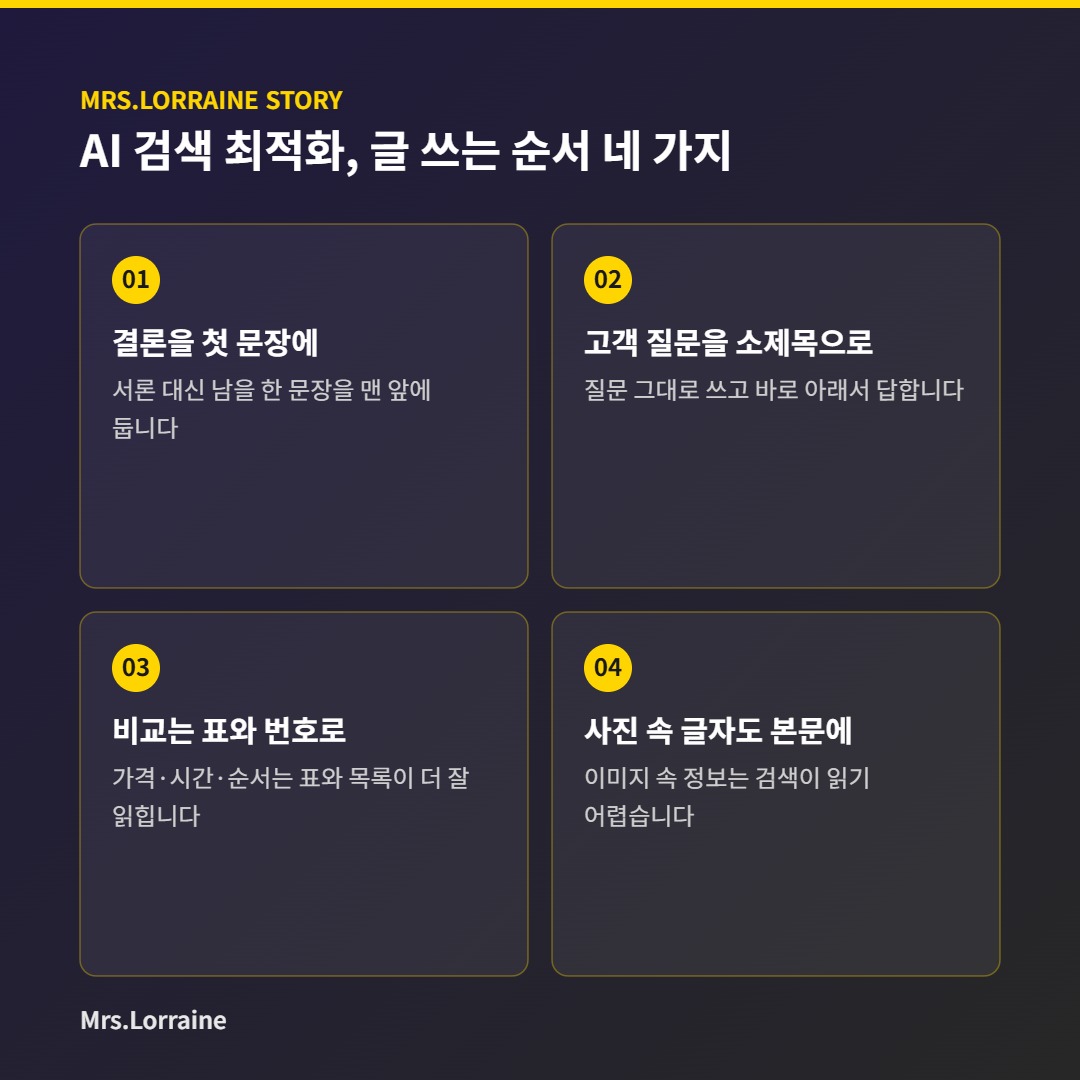
First, place the conclusion in the first sentence. Do not write a long introduction; instead, write a sentence at the very beginning that will leave a lasting impression after reading.
Second, write the customer's question as a subheading. Instead of "Price Guide," write the question exactly as it is, such as "How much is a haircut?" and answer it in the first sentence immediately below.
Third, organize comparisons and order using tables and numbers. Information viewed side-by-side, such as price, time, and order, is easier to read in tables and numbered lists than in sentences.
Fourth, write the text in the photo in the main body as well. Information contained only within the image is difficult to read during searching. Write the same sentence once more in the main body.
How should we handle numbers?
I only write numbers with sources and dates. I exclude unverified numbers and fill it with actual experiences and examples. The 'needs verification' habit discussed in Part 3 of Manager Oh's Work Log is applied here just as it is.
Start by applying all four methods to the piece you are currently writing. Change the first sentence into a conclusion, turn a subheading into a question, organize prices or sequences in a table if applicable, and rewrite the text from the photos in the body text. Once you make these changes to just one piece, you will naturally find yourself writing in this order from the next one onwards.
You can also edit posts you have already uploaded. Try changing the opening sentence and subheadings of the posts that received the most customer inquiries. It takes less time than writing a new post, and it revives the usefulness of your existing writing. If you note the date of the revision, it is also easy to compare what changes were made later.
Frequently Asked Questions
Is it okay to use the exact same posts on the blog and website?
Even with the same topic, it is better to approach questions from different angles. If you divide the website around standards and organization, and the blog around examples and experiences, there will be no overlap.
Is it a disadvantage if the text is short?
Whether the answer to the question is clear comes first, rather than the length. However, if the answer, evidence, and experience are included, it will naturally reach a certain length.
Do I have to edit what I've already written?
It is sufficient to change just the first sentence and subheadings of frequently read texts. You do not need to change everything at once.
AI search optimization is writing that answers the customer's questions first. In the next installment, we will discuss a single phrase to start and end the day with the AI employee.
Discover more of Mrs. Lauren's story
📷 Social Media Channels
- Instagram Korea @mrs.lorraine.kor
- Instagram Global @mrs.lorraine.global
- YouTube Korea @MrsLauren_Korea
- YouTube Global @Mrs.Lorraine_Korea
💬 Consultation and Writing
- Homepage mrslorraine.com
- Naver Blog Mrs.Lorraine
- KakaoTalk Channel 1:1 Consultation
- Project Inquiry Contact Us