

Many owners struggle to sell products they have created because they feel confident in their quality but their customers don’t seem to respond to them. Surprisingly, the answer isn’t hidden in photos or prices; it often lies in a few lines of “sentences.” That’s copywriting.
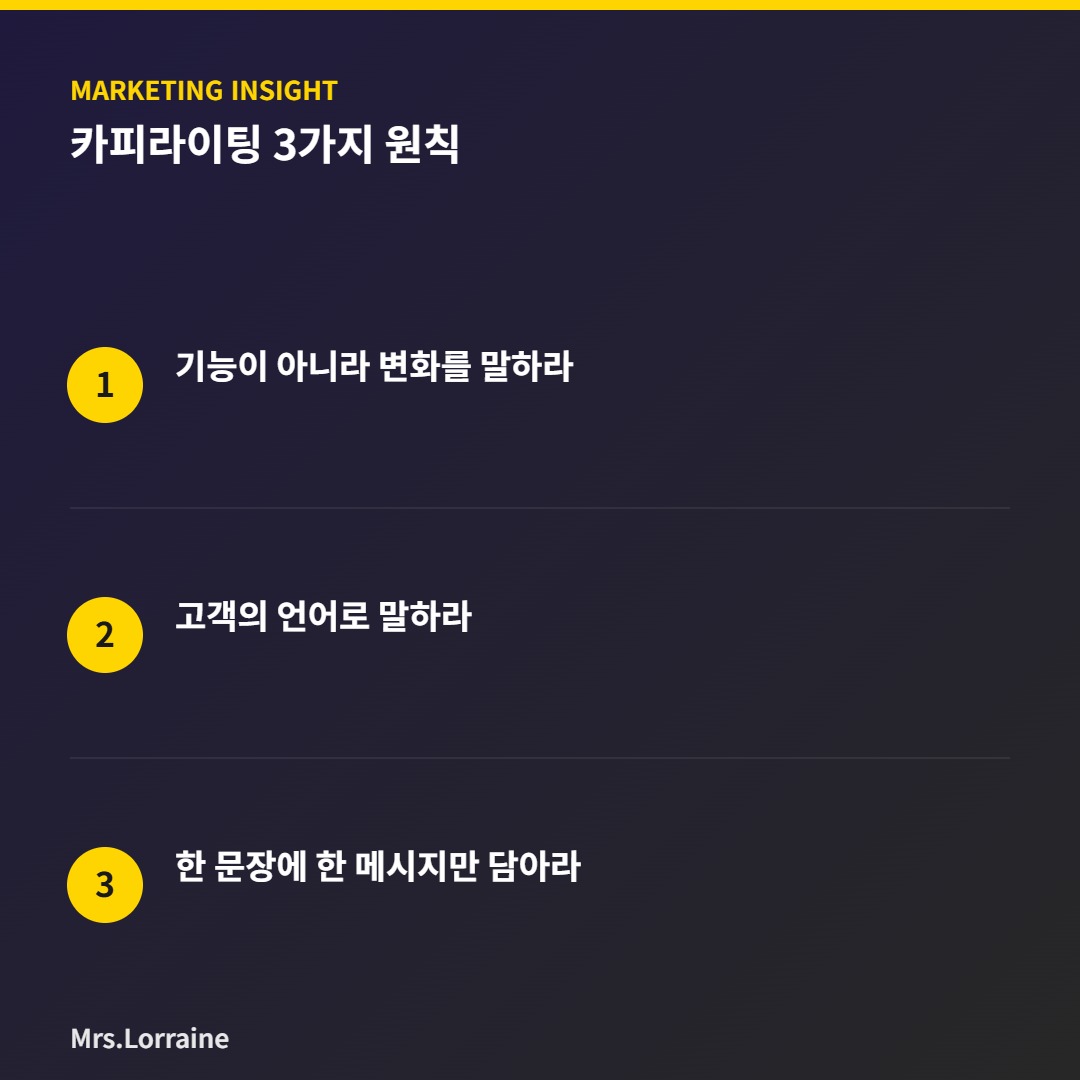
When you hear the term copywriting, many small business owners immediately get scared. They don't have the luxury of hiring a professional copywriter, and trying to follow the sophisticated wording used by advertising agencies only makes it awkward. But copywriting is not about flashy rhetoric; it's more like the skill of accurately reading a customer's mind and communicating it in a concise way. Knowing just a few principles means that anyone can use it.
Copywriting is also one of the first things that MicroSolutions’ marketing team practices with small business owners in their training sessions. Just by remembering three principles instead of lengthy theories, the details of the page and the social media posts become noticeably different.
Principle 1: Say “change” rather than “function” People buy not the specifications of a product, but the change it will bring. This is why the sentence “a high-moisturizing cream” is much more appealing than the explanation “skin that doesn’t feel tight even after just washing in the morning.”.
In fact, one of the course participants reported that after changing the tagline to “a day where you don’t have to bring a charger with you on your commute,” the number of inquiries increased significantly. The feature is inside the product, but the change takes place within the customer’s daily routine.
Principle 2. Speak in the customer's language Sometimes the professional terms used by the manager every day and the language that customers actually search for and say are different. A more concise sentence that conveys the same meaning is “cold-pressed organic method,” rather than the expression “without heat, the nutrients remain intact.”.
In microlearning sessions, Meselson first asks students to write down, “What would a customer say if they explained our product to a friend?” This sentence often serves as the starting point for the most natural copy. The fewer professional terms used, the more trust is built.
Principle 3. Include only one message in a single sentence Many business owners, wanting to convey even more of the product's benefits, tend to cram multiple messages into a single sentence. However, the more messages there are, the less the customer remembers anything.
“A sentence that focuses on a single scene, like ”fresh, healthy, inexpensive, and with fast delivery,“ is much more memorable than a sentence that says something like ”If you order today, you’ll receive vegetables that just came straight from the field tomorrow morning.” The courage to narrow the message down to one point conveys more than just that.
Trying to apply all three principles at once can be overwhelming. This week, it’s enough to start small by changing just one first sentence on the detailed page, and next week, just one caption on a social media post. Just one small change can make a noticeable difference in how long customers stay and how many inquiries they make.
The three principles are not particularly elaborate, but if you practice them consistently, you will definitely see results that make a difference. Start by changing the first sentence of your detailed page from “functionality” to “change.” If you find it daunting to try it on your own, you can practice it together in the marketing training at MicroSolutions.