
Dozens of social media followers come and go every day. When algorithms change, posts that were visible yesterday may not reach anyone today. However, email addresses are different. Once a customer joins the subscriber list, they receive the emails sent by the business owner regardless of the algorithm. That is why many experts say, “Social media is borrowed land, email is your own land.” Today, we have summarized the four steps to starting a newsletter for small business owners who have never done email marketing before.
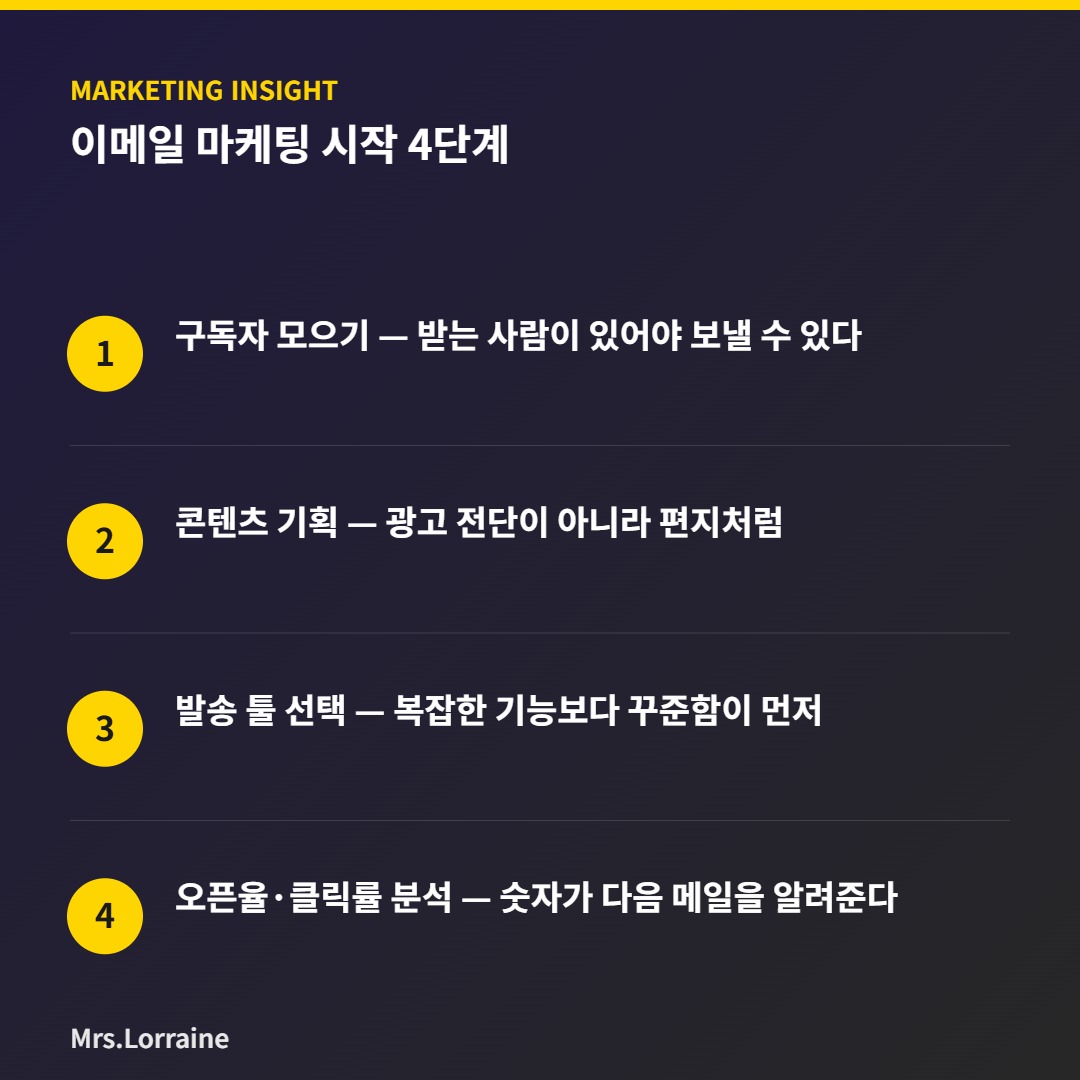
Step 1. Gather Subscribers — You need recipients to send.
The first thing you need is a reason to leave your email address. No one will respond with just a “Subscribe to Newsletter” button. Instead, you must offer specific benefits. It must be clear what the subscriber will gain immediately, such as a 10% discount coupon for new sign-ups, private new product previews, or industry trend summaries.
It is also important to maximize touchpoints for receiving emails, such as the bottom of the homepage, Instagram profile links, and QR codes in offline stores. In small stores, simply placing a note next to the checkout counter that says, "Leave your email and get a discount on your next purchase," can attract a few customers a day.
Step 2. Content Planning — Like a letter, not an advertising flyer
If your newsletter constantly shouts "Discount! Discount! Sale!", subscribers will quickly get tired of it. It is recommended to mix sales emails with informational emails in a ratio of 7:3 or 6:4. You must consistently include engaging content, such as product backstories, the manufacturing process, customer reviews, and seasonal usage tips, to give subscribers a reason to open your emails.
You need to pay attention to even a single line of the headline. Titles that pique curiosity, such as “The scent visible only on rainy days,” significantly boost view rates compared to “New September Product Announcement.”.
Step 3. Select a Sending Tool — Consistency Comes Before Complex Features
You don't need to choose expensive and complex tools right from the start. There are many email sending services available with free plans that are sufficient for managing up to a few hundred subscribers. You can get started simply by selecting a template, uploading your subscriber list, and setting the sending days.
What matters is not the number of features, but the rhythm of 'sending on the same day every month.' If you fix the sending time, such as every other Tuesday morning, subscribers will naturally look forward to that time.
Step 4. Analyze Open and Click-Through Rates — The Numbers Tell You About the Next Email
After sending an email, you must check the open rate and click-through rate. If the open rate is low, the subject line is likely the problem; if the email was opened but there were no clicks, you should check the content of the email or the placement of buttons. The industry average open rate is usually around 20 to 301 TP, so you can gauge the current standing of your email based on this figure.
You don't need to create a perfect newsletter all at once. Starting small and refining it little by little while watching the numbers is the greatest advantage of email marketing. As you consistently build conversations with each and every subscriber, they will become your most loyal customer base before you know it.