

A business owner running a handmade leather workshop in Gyeonggi Province had quite a few international followers thanks to photos of their work posted on Instagram. The problem, however, came next. Even when foreign followers visited the website, everything was in Korean, so they couldn't even figure out where to click to place an order. Consequently, they repeatedly closed the window after leaving only a comment saying, "It looks cool, but I don't know what it says." It was like losing valuable customers right at the doorstep.
The owner was not unaware of this issue. However, they said that whenever they heard the phrase "multilingual website," the first thing that came to mind was the burden of having to hire a separate translator and rebuild the entire site from scratch. Even during the initial consultation with Mrs. Lauren, the very first question raised was, "Does a small workshop like ours really need to go to such lengths?" In a sense, vague fear was blocking the way to get started.
So, instead of proposing a complete overhaul, Mrs. Lauren designed three small changes that can be started right now.
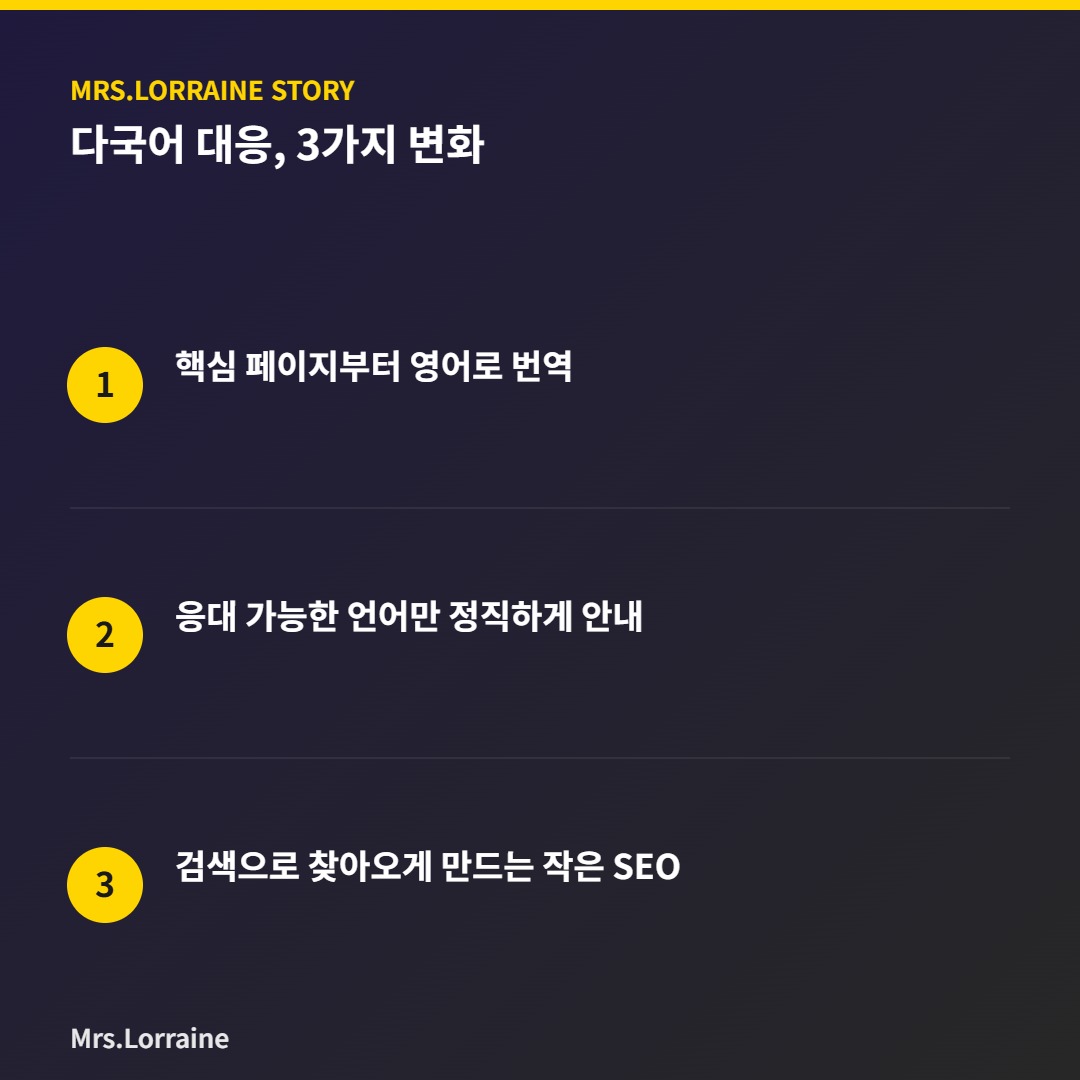
Change 1. Start with 'key pages' instead of the entire translation.
The first thing we did was, instead of translating the entire site, rewrite only the three pages that international customers actually view—brand introduction, featured products, and contact methods—in English. We left the rest of the pages as they were and rewrote only these three in natural-sounding English. We spent the most time writing it in a way that felt like explaining it to a foreign friend, rather than using a translation style. The key was to significantly reduce costs and time while ensuring that foreign visitors could clearly understand “what they can buy here.”.
Change 2. Honestly providing information only in available languages
The second change was the inquiry form. Previously, we used an automatic translator to accept inquiries in all languages, but in reality, we could only respond in Korean and English. So, we clearly stated on the inquiry form, "We currently respond in Korean and English," and allowed users to select their preferred language. Paradoxically, by honestly narrowing down the available languages, complaints about slow responses disappeared, and instead, trust was built that "this brand is trustworthy." Regarding this change, the CEO remarked, "Not exaggerating that we could respond in all languages actually made us look more professional.".
Change 3. Small SEO features that bring foreigners here via search
The third step was to naturally incorporate specific expressions that foreigners would actually search for—such as 'Korean handmade leather bag'—into the English page titles and descriptions. This effectively created another channel for a steady stream of international visitors via Google search, without spending exorbitant advertising budgets. Although it involved refining every single small sentence, the cumulative effect was by no means insignificant.
About two months after implementing the three measures, the owner said, “Overseas followers who used to just click ‘Like” and leave are now leaving real questions.“ Inquiries leading to orders are also increasing little by little every month. Above all, freeing himself from the burden of having to ”change everything” and starting with what he could do became a major turning point for the owner.
When Mrs. Lauren discusses multilingual support, what she always emphasizes is not perfect translation, but the "courage to start." Many business owners postpone even attempting it due to the weight of the term "global marketing," but simply expanding little by little from one or two key pages can produce significantly different results. Today, Mrs. Lauren works with business owners to find the one step they can take right now, rather than focusing on grandiose plans.